CASE STUDY
TRUST LEADERSHIP INSTITUTE | DANA POINT, CA
PwC’s Trust Leadership Institute is an exclusive multi-day, invitation-only program for senior executives and board members designed to reinforce PwC’s mission to “build trust in society and solve important problems.”
The TLI program agenda features presentations and conversations aimed to strengthen trust across diverse industries – including AI, cybersecurity, ESG, corporate culture, and technological disruption.
Hosted in venues across the United States, TLI has engaged hundreds of executives for honest and unfiltered discussions around topics that are central to effective leadership and strategy.
CREATIVE ROLE:
Design Lead, Creative Project Management
THE TLI PROGRAM
-
Location: Dana Point, CA
Venue: Waldorf Astoria Monarch Beach
Total invited guests: ~50 executives
Program: Keynotes, workshops, hospitality events -
PwC US Leadership
PwC Creative lead
Dedicated PwC TLI Marketing team
External production & furniture vendors
Hotel-contracted internal print vendor
-
The TLI program was designed to provide an immersive, C-suite level experience and included:
Customized branding for casework furniture
Environmental graphics applied to existing hotel spaces for a consistent brand experience
Printed assets for workshop sessions, handouts, and reference materials
Furniture and accessories
SITE & CONTEXT
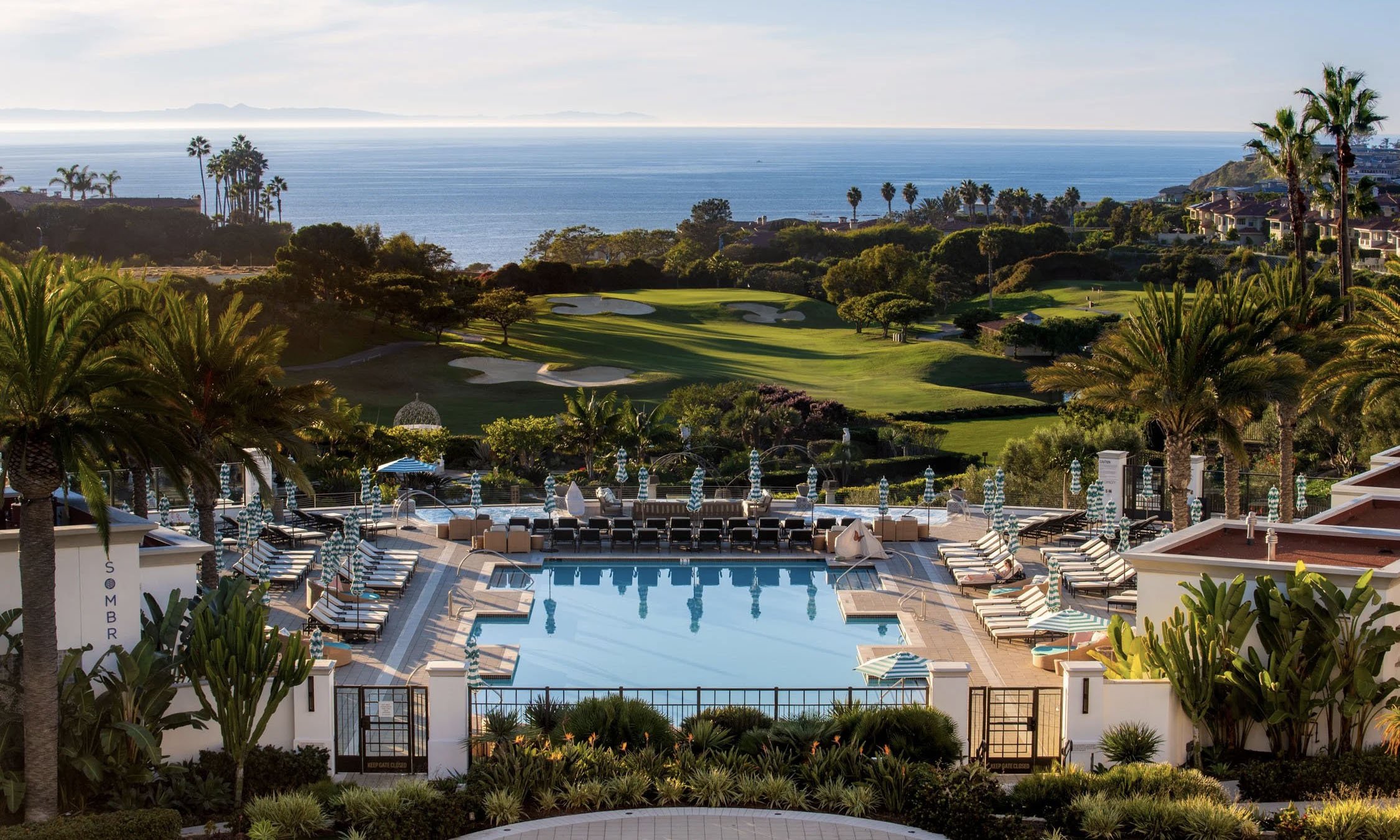
Waldorf Astoria Monarch Beach
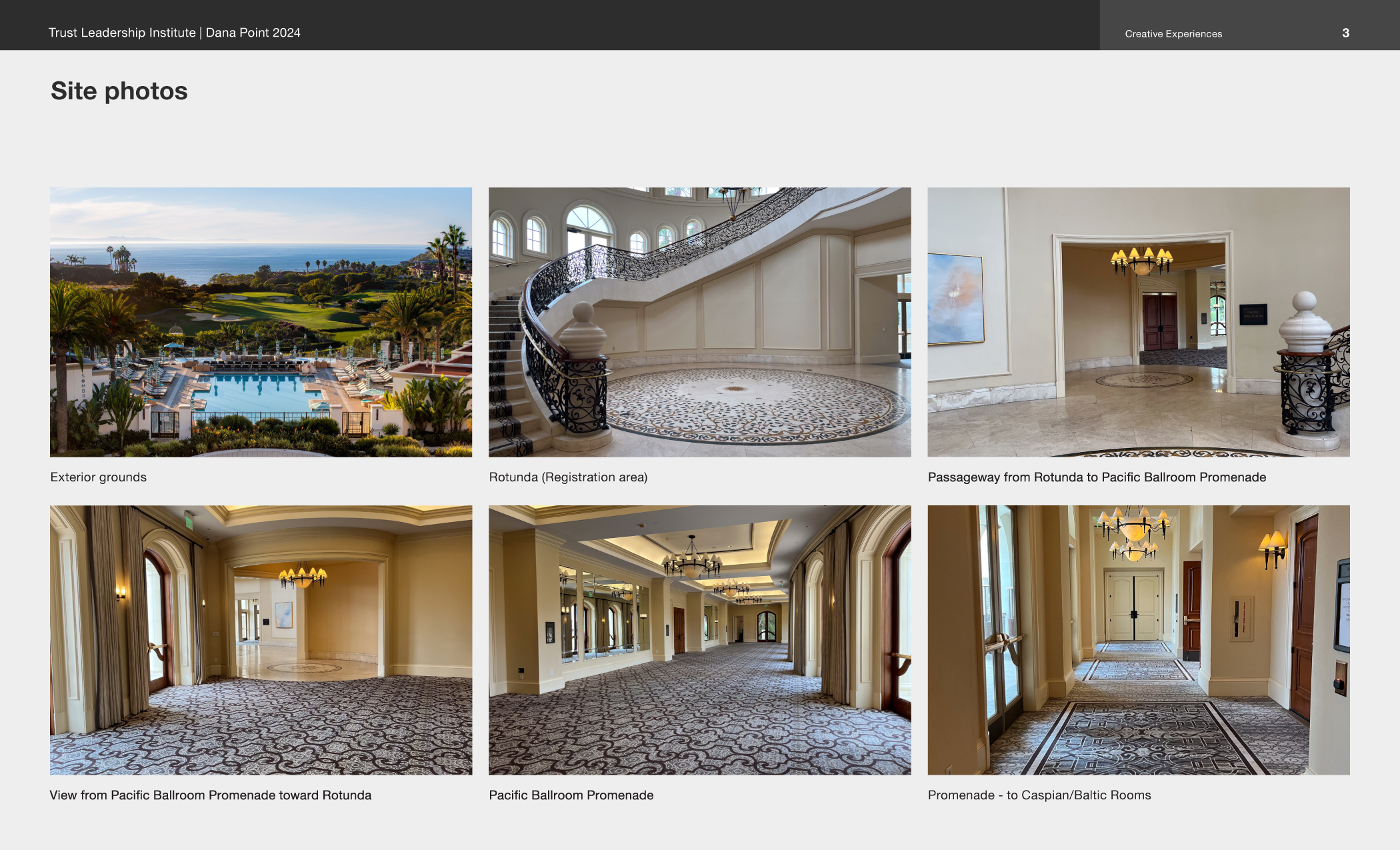
To facilitate an exclusive and schedule-efficient experience for program attendees, event activities were held in adjacent spaces on the resort’s 3rd floor, including the Pacific Ballroom (General Sessions) and Caspian & Baltic meeting rooms (Breakouts).
The program footprint was anchored by the central stair rotunda, serving as the Registration area.
DESIGN APPROACH
Adapting the Established Creative Theme
The TLI program series incorporated a consistent design theme across all events – regardless of the hosting venue.
Here, the Waldorf Astoria’s sophisticated, classical design inspired an understated approach to environmental branding. Design interventions were purposeful – to communicate messaging and wayfinding – and integrated into existing architectural features where appropriate.
PROVIDING CONTEXT & DIRECTION
-
![]()
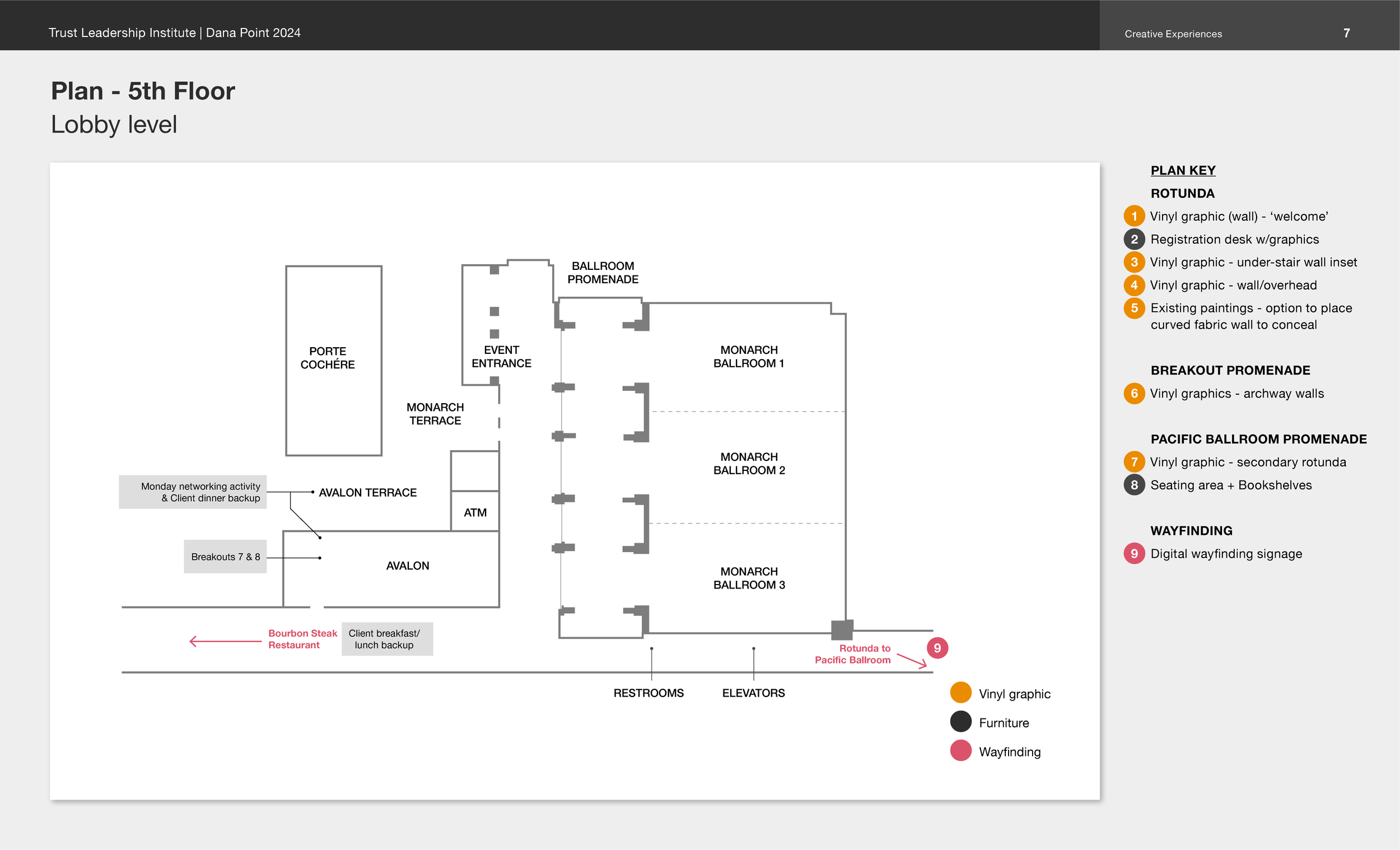
Orientation: Lobby Level schematic floor plan illustrates wayfinding locations to primary program spaces, accessible via the central stair rotunda.
-
![]()
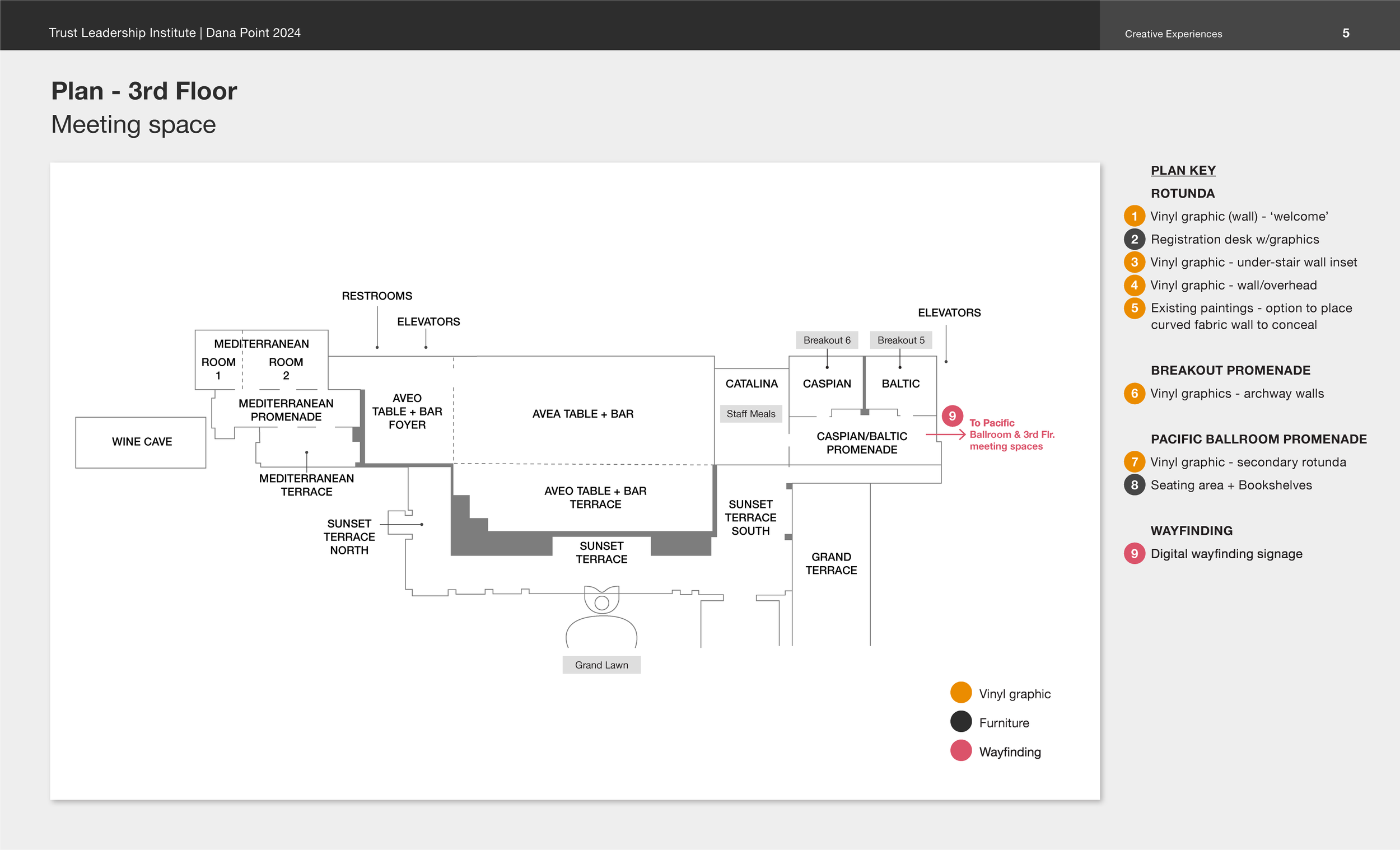
Orientation: 3rd Floor schematic floor plan highlights TLI-associated spaces and directional signage location for wayfinding.
-
![]()
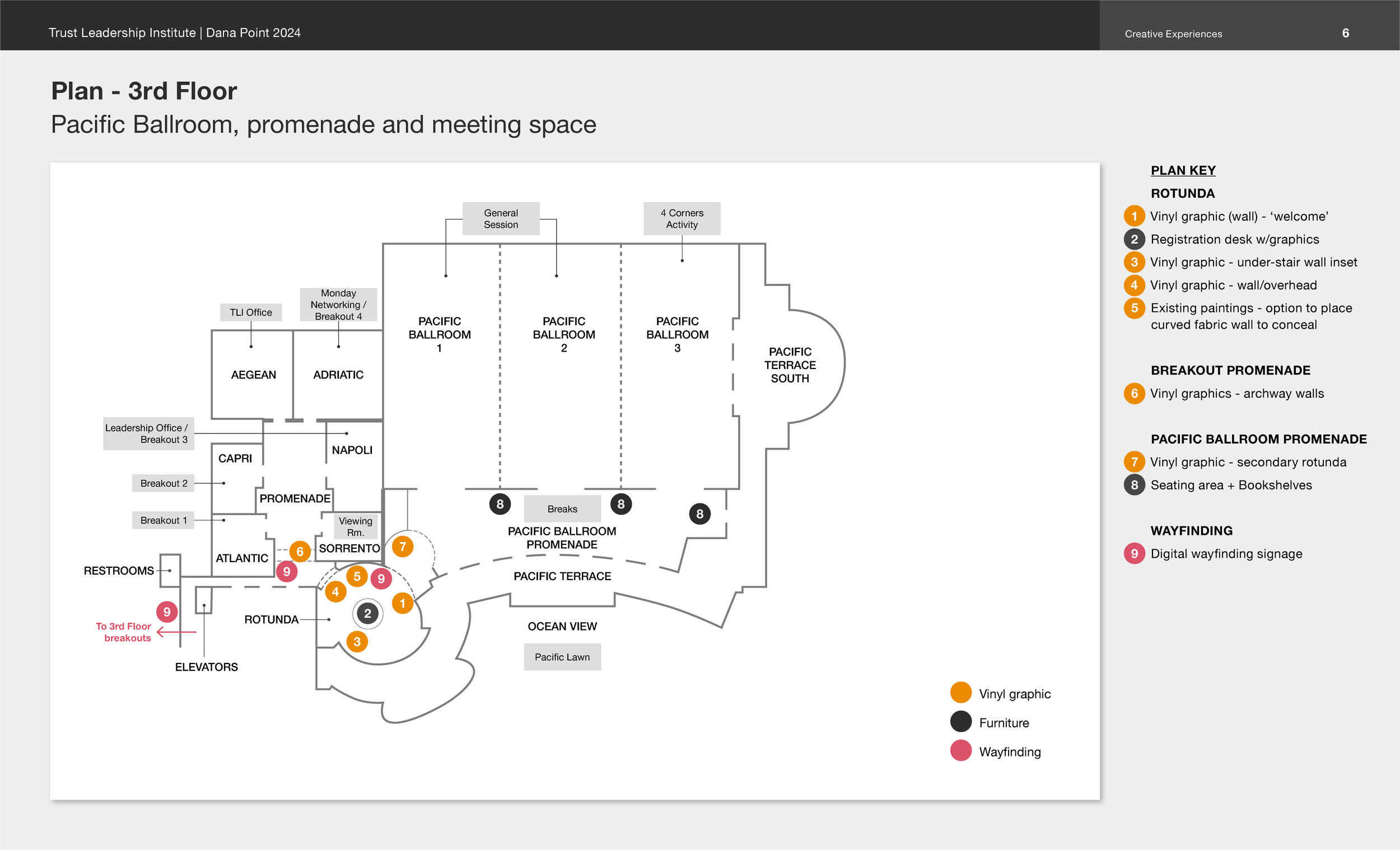
Orientation: Schematic floor plan illustrating primary TLI program space and associated wayfinding, furniture, and branding locations.
-
![]()
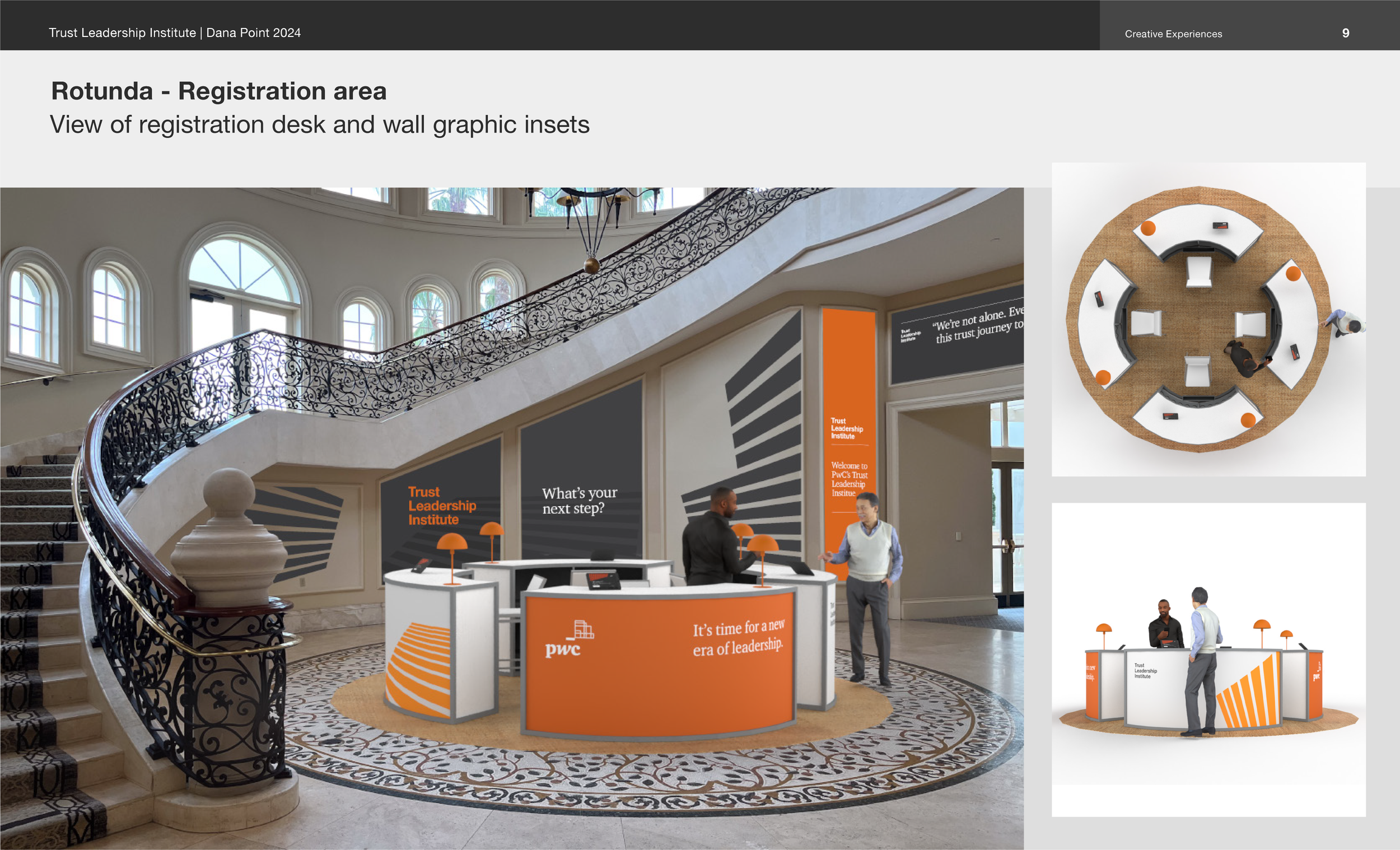
First impressions: Rendered view of event registration area at central rotunda, illustrating vinyl graphic appliqués and customized casework furniture. Branded materials were integrated into existing architectural features to create a seamless aesthetic across the TLI environment.
-
![]()
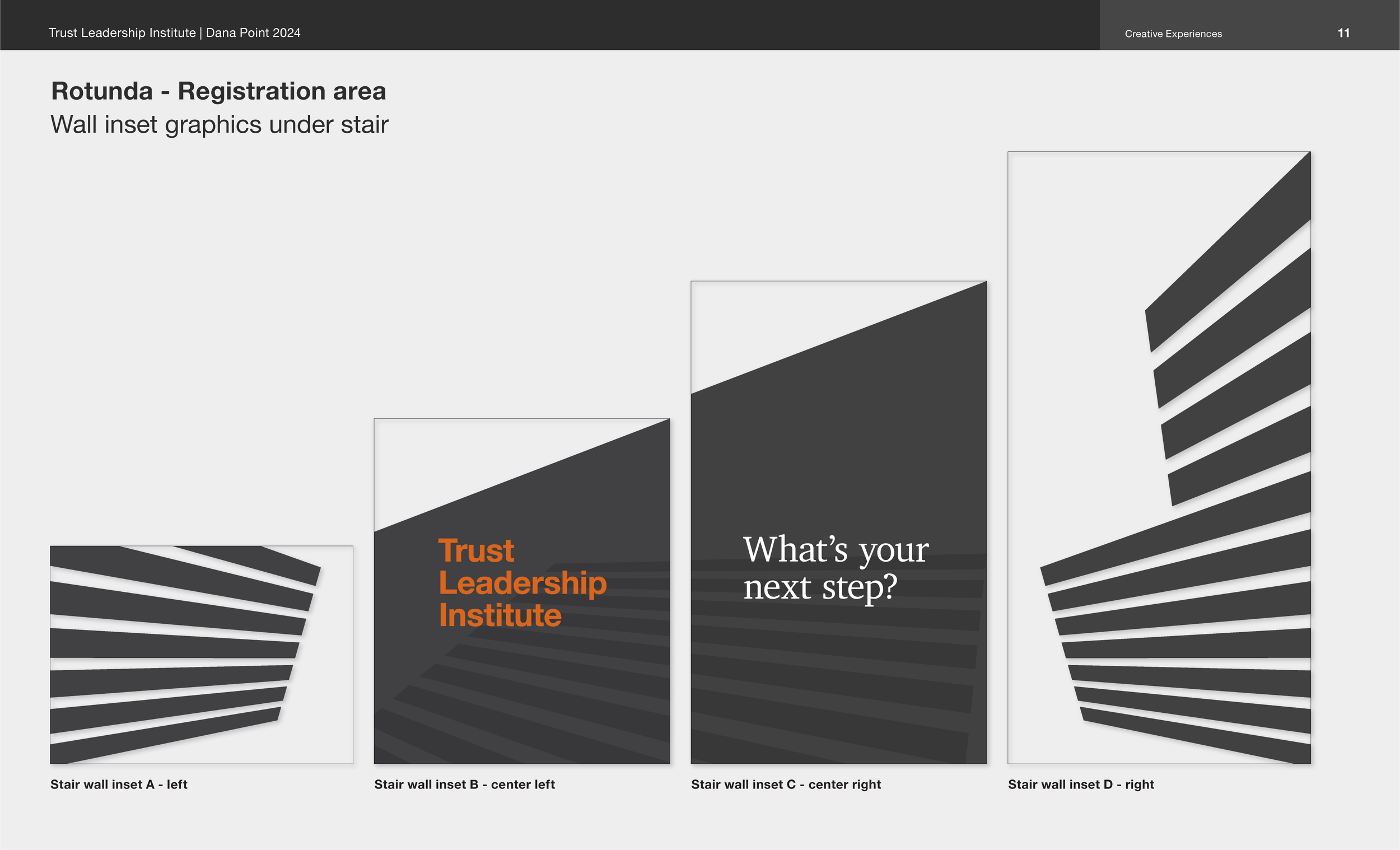
Design integration: Overview of die-cut graphics panels applied to rotunda surfaces, communicating high-level TLI program messaging.
-
![]()
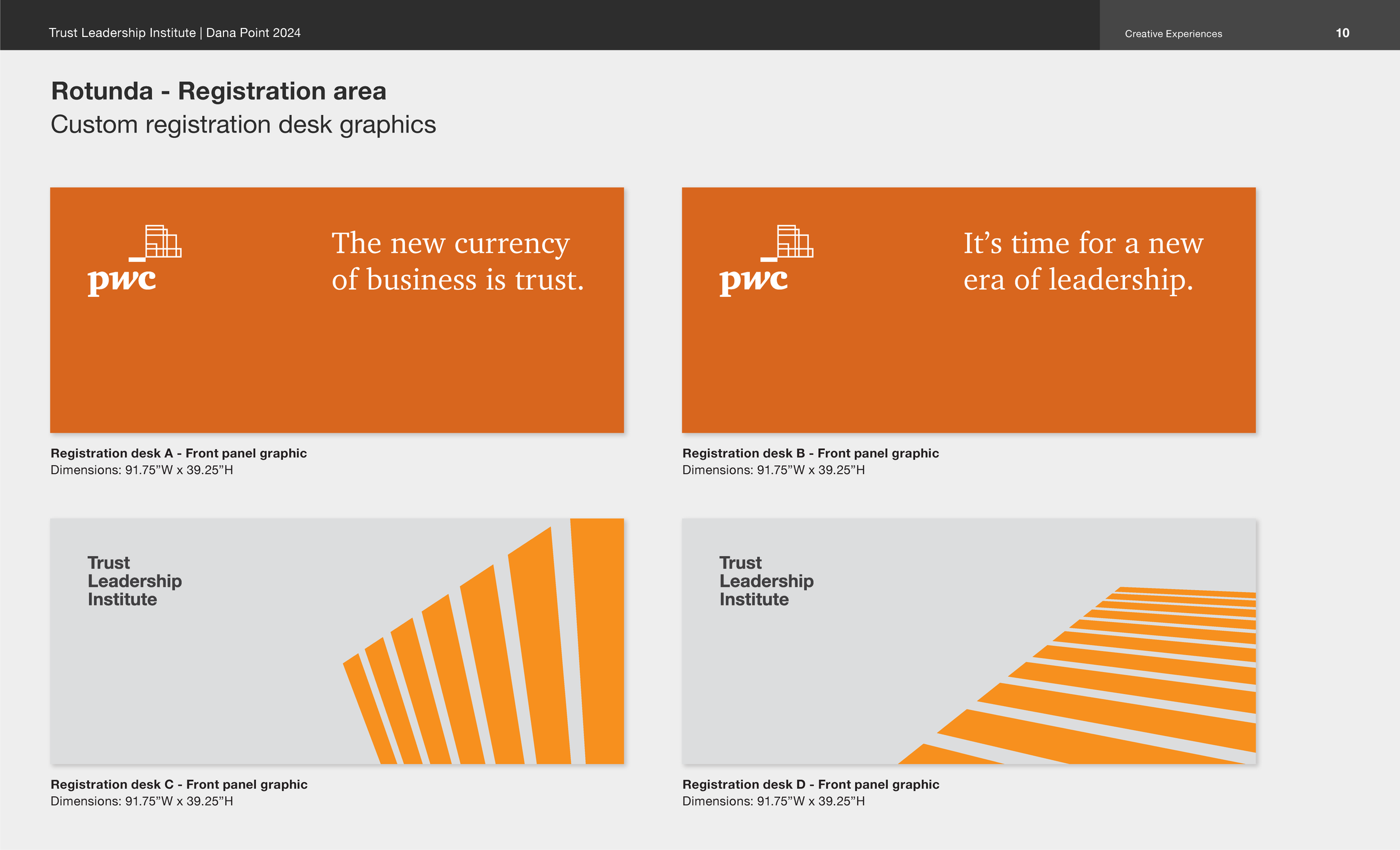
Customization: TLI-themed vinyl graphics were applied to casework furniture. Use of rented structures allowed for budget efficiencies while also providing opportunities for customization. Final artwork was provided to the furniture vendor for production and application.
-
![]()
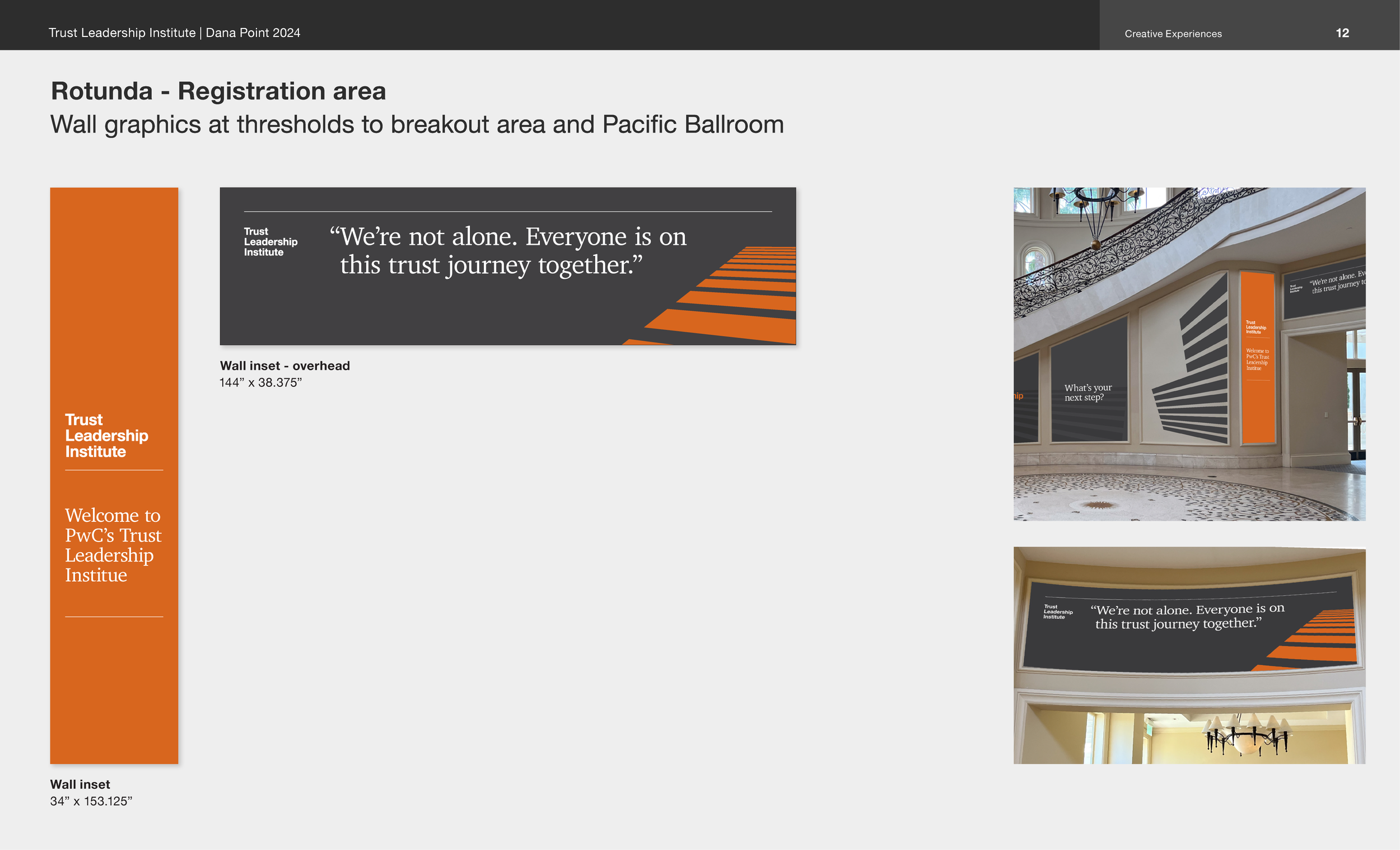
Intentional & purposeful: Architectural insets provided opportunities for targeted messaging, as well as presenting visual cues for wayfinding. The artwork shown here was placed at the threshold between the registration area and breakout rooms.
-
![]()
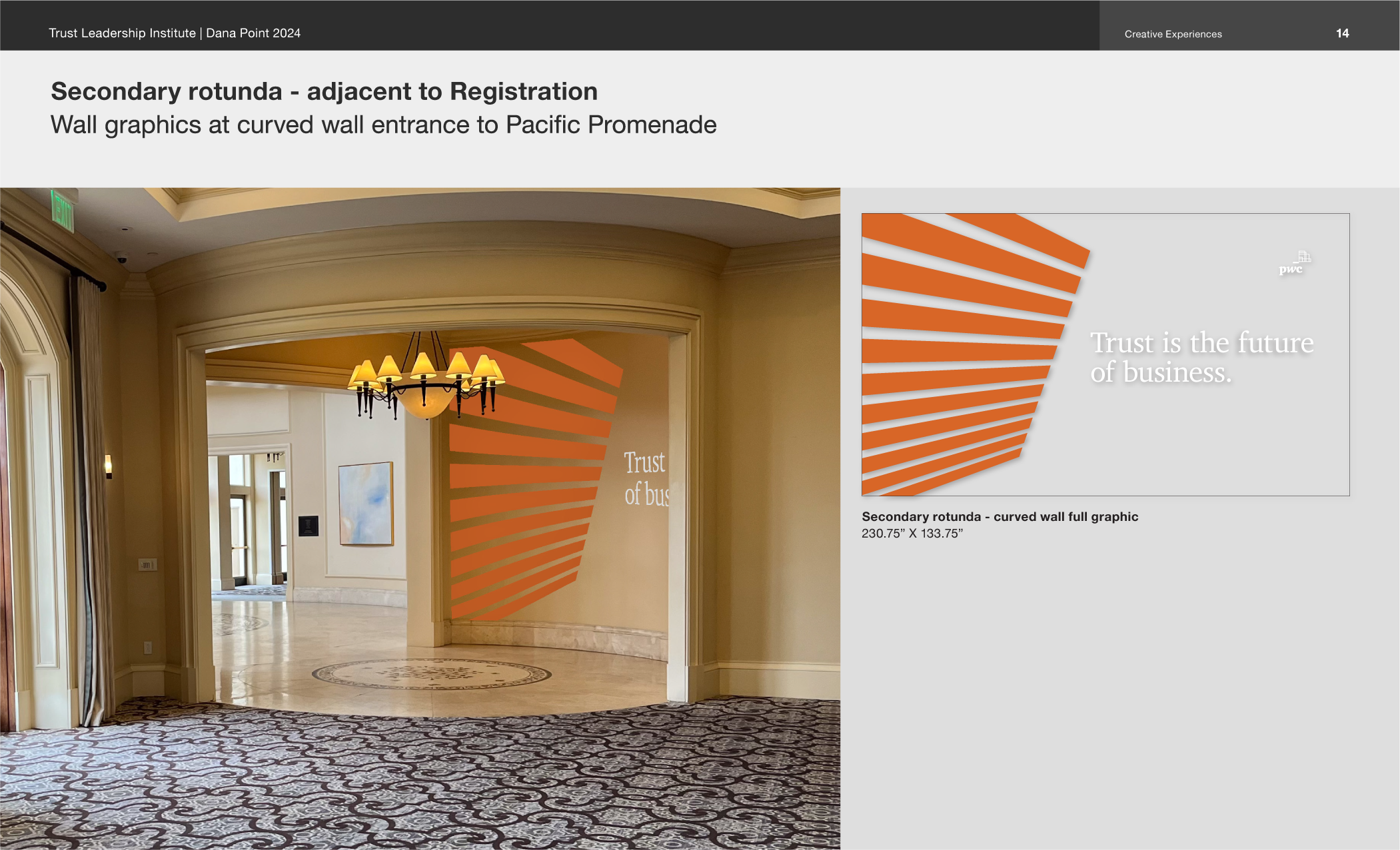
Transitional node: Rendered view of secondary rotunda, connecting the registration area with ballroom pre-function space.
-
![]()
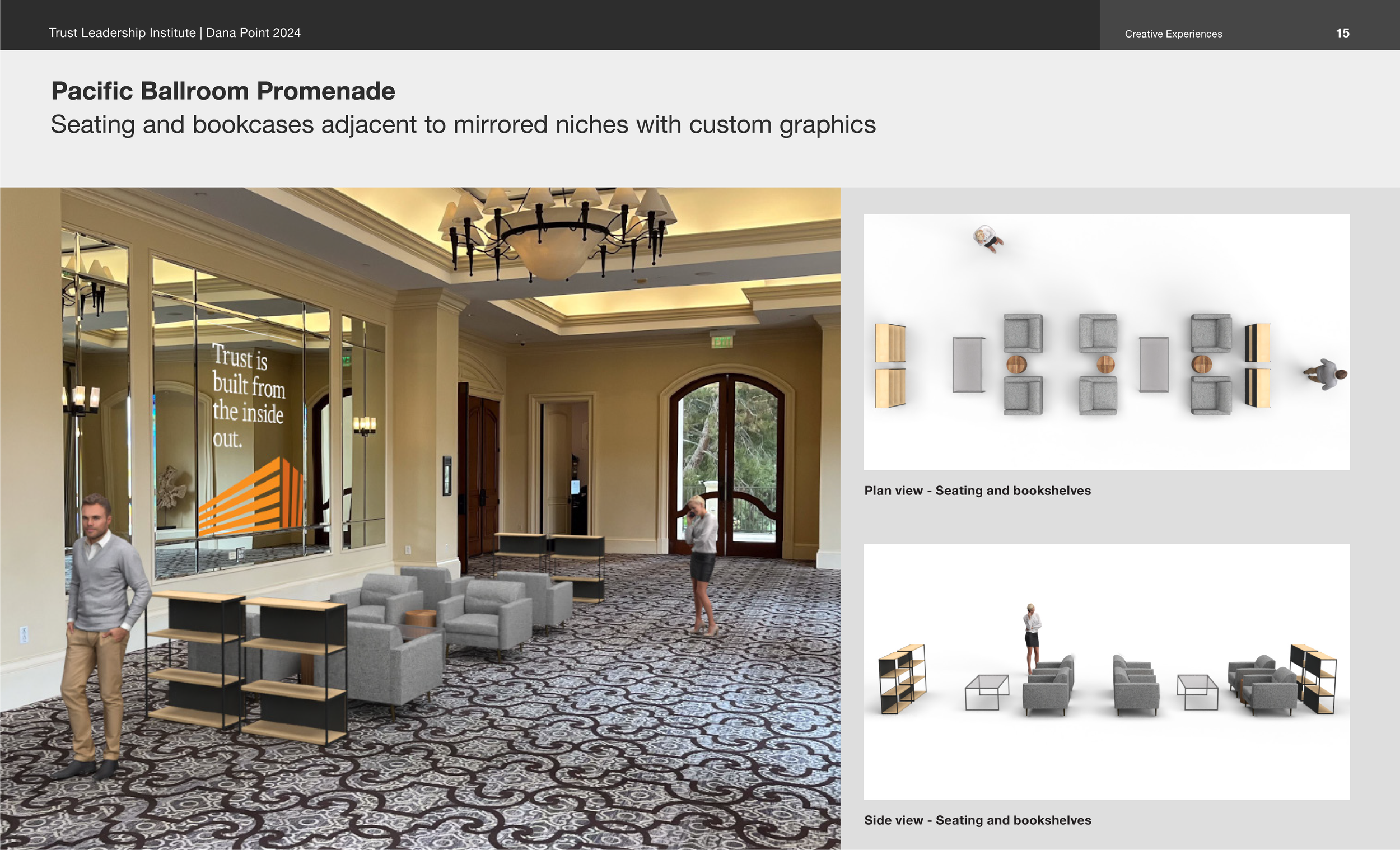
Using the space: Existing mirrored surfaces in pre-function spaces serving the main ballroom became the perfect canvas for key TLI messaging – providing high-level connections with with general session content. Furniture selections provided a place to check in with work, and encouraged interaction among attendees.
-
![]()
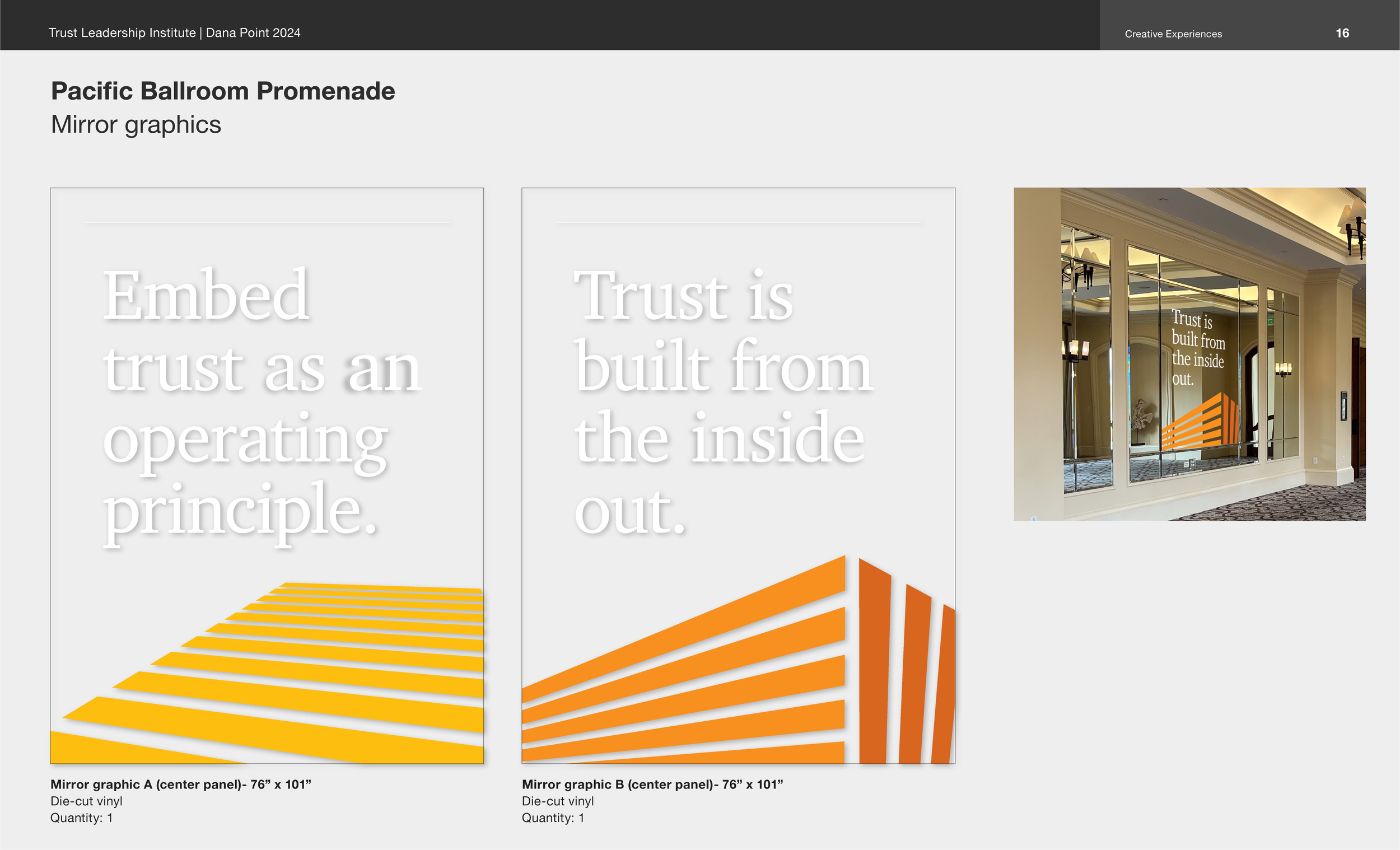
Message minimalism: Die-cut, full-color vinyl graphics were the media of choice to provide an understated, but bold integration of TLI branding into existing interiors.
-
![]()
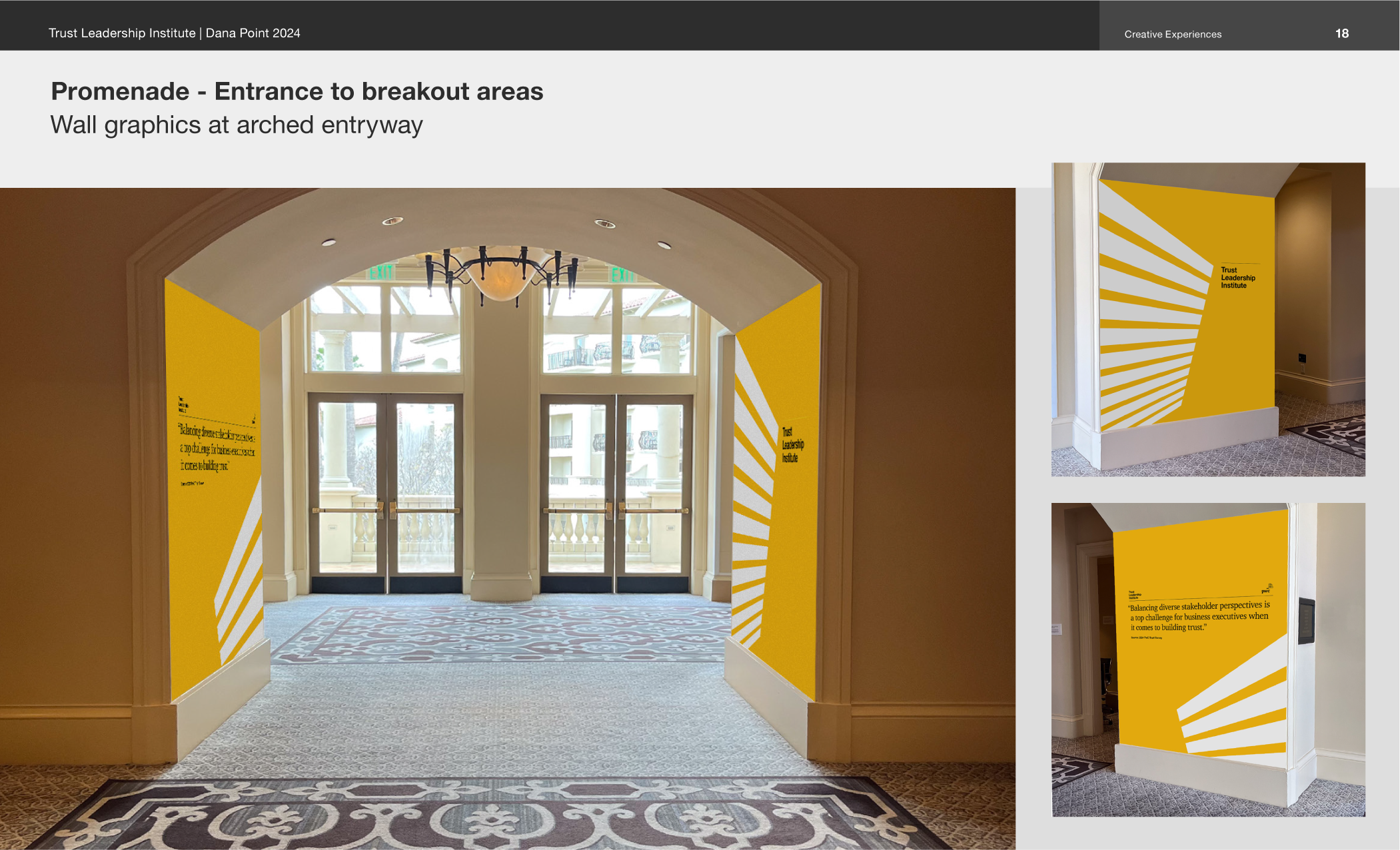
Leading the way: Vinyl wall graphics – again, integrated into existing architectural features – provide visual cues for attendees moving from registration to individual breakout rooms.
-
![]()
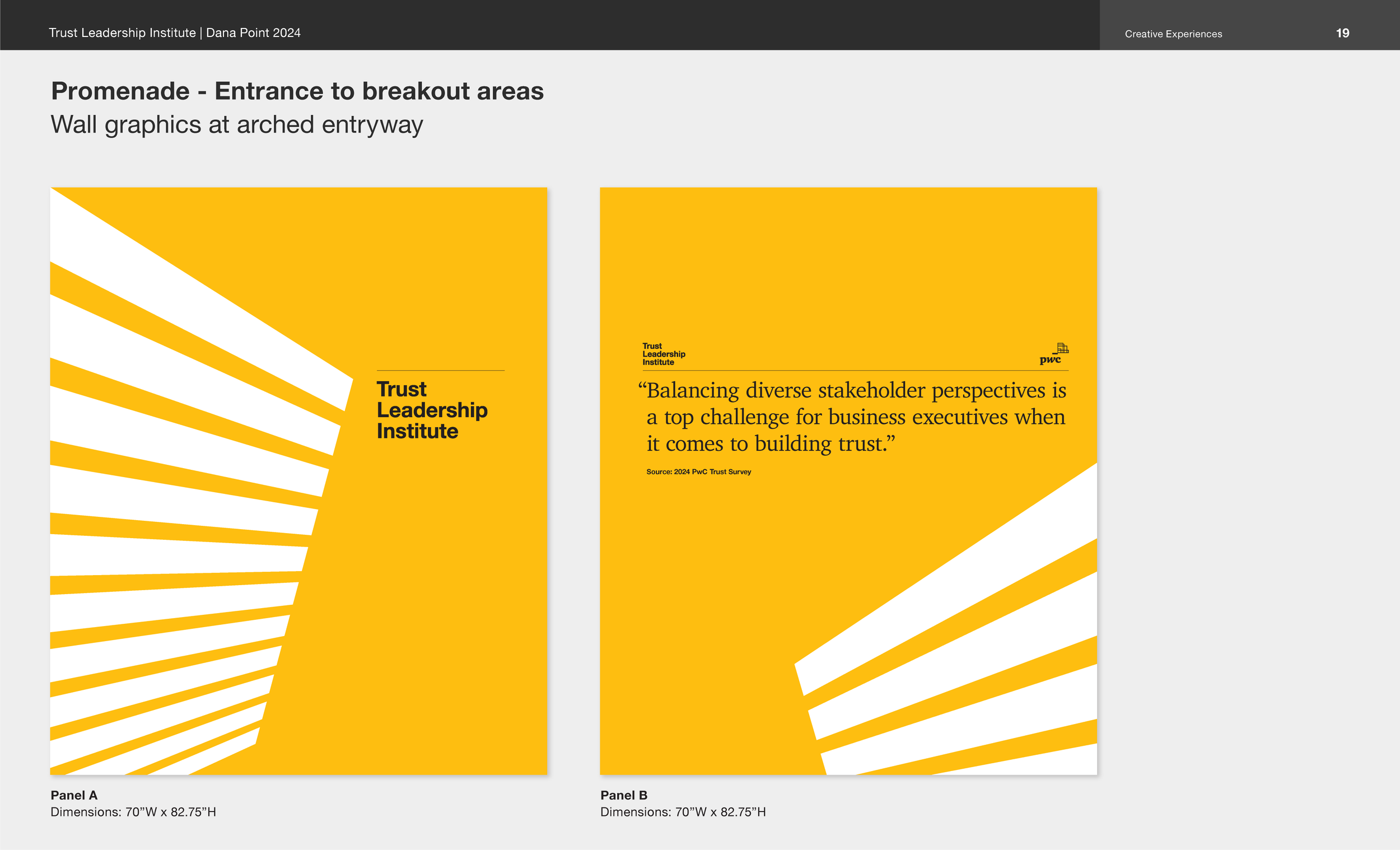
Not so mellow yellow: Colorful archway graphics – featuring PwC survey content – are visible from the registration area and visually guide attendees from the rotunda to breakout rooms.
PRINT COLLATERAL
-
![]()
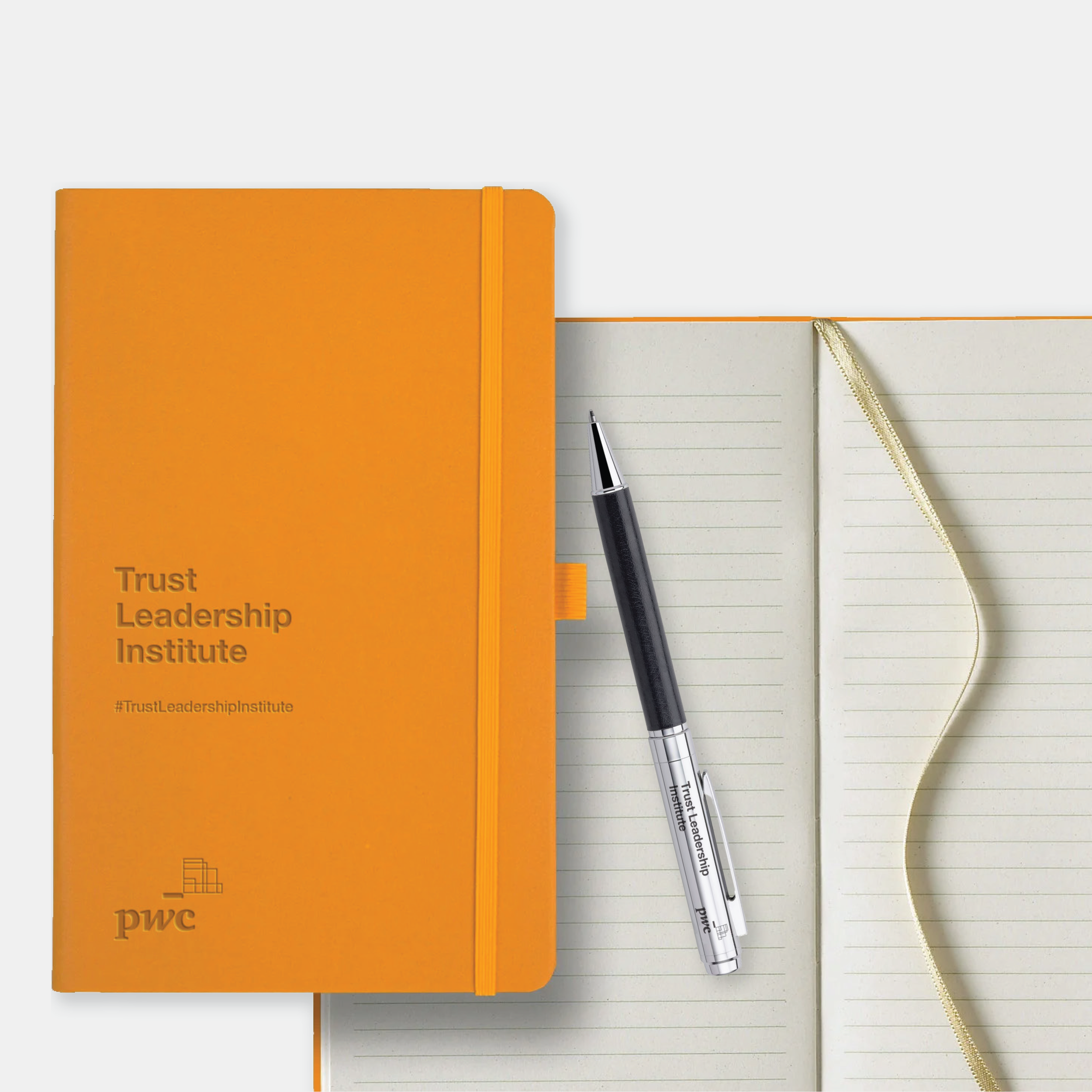
Custom notebook & pen
-
![]()
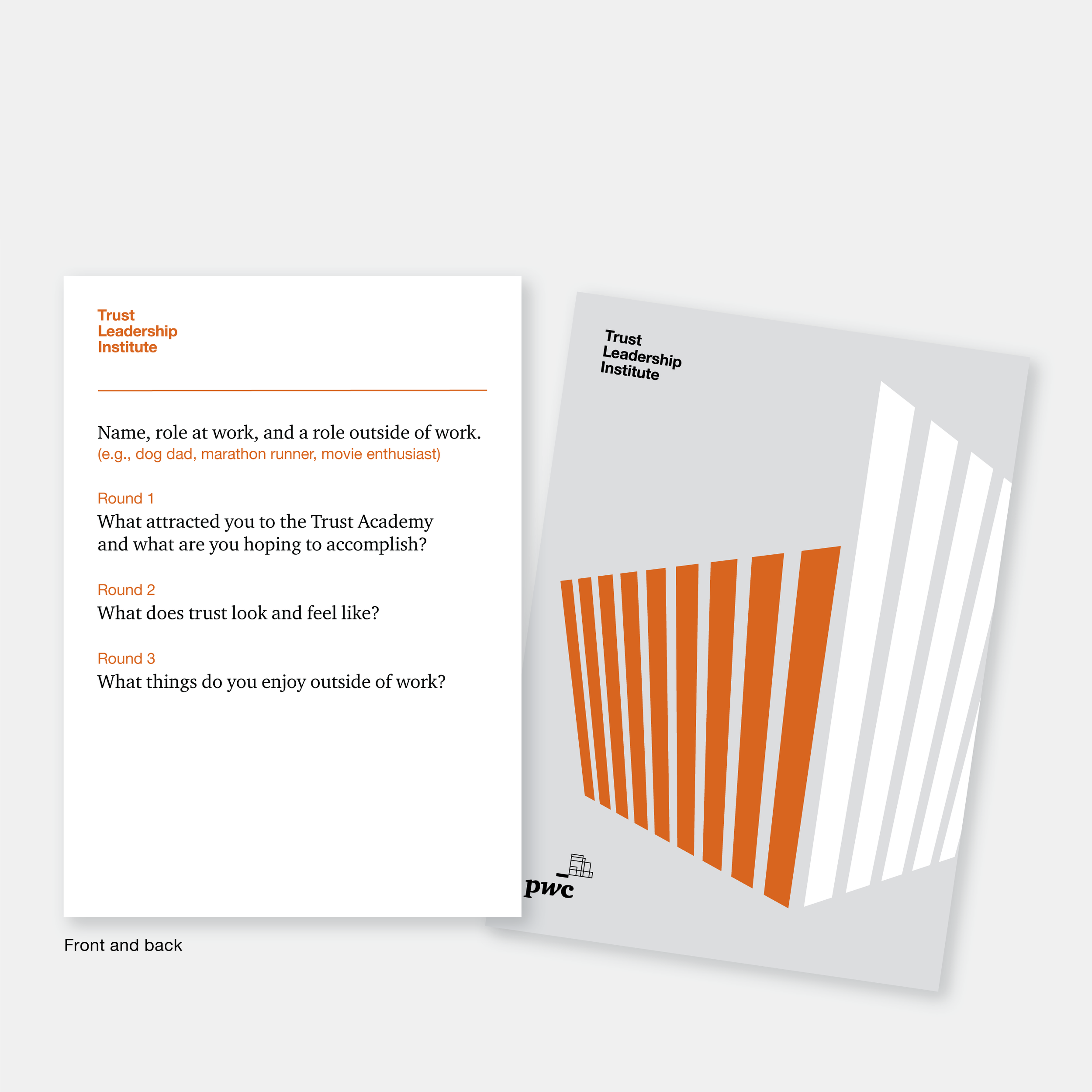
Breakout session activity card
-
![]()
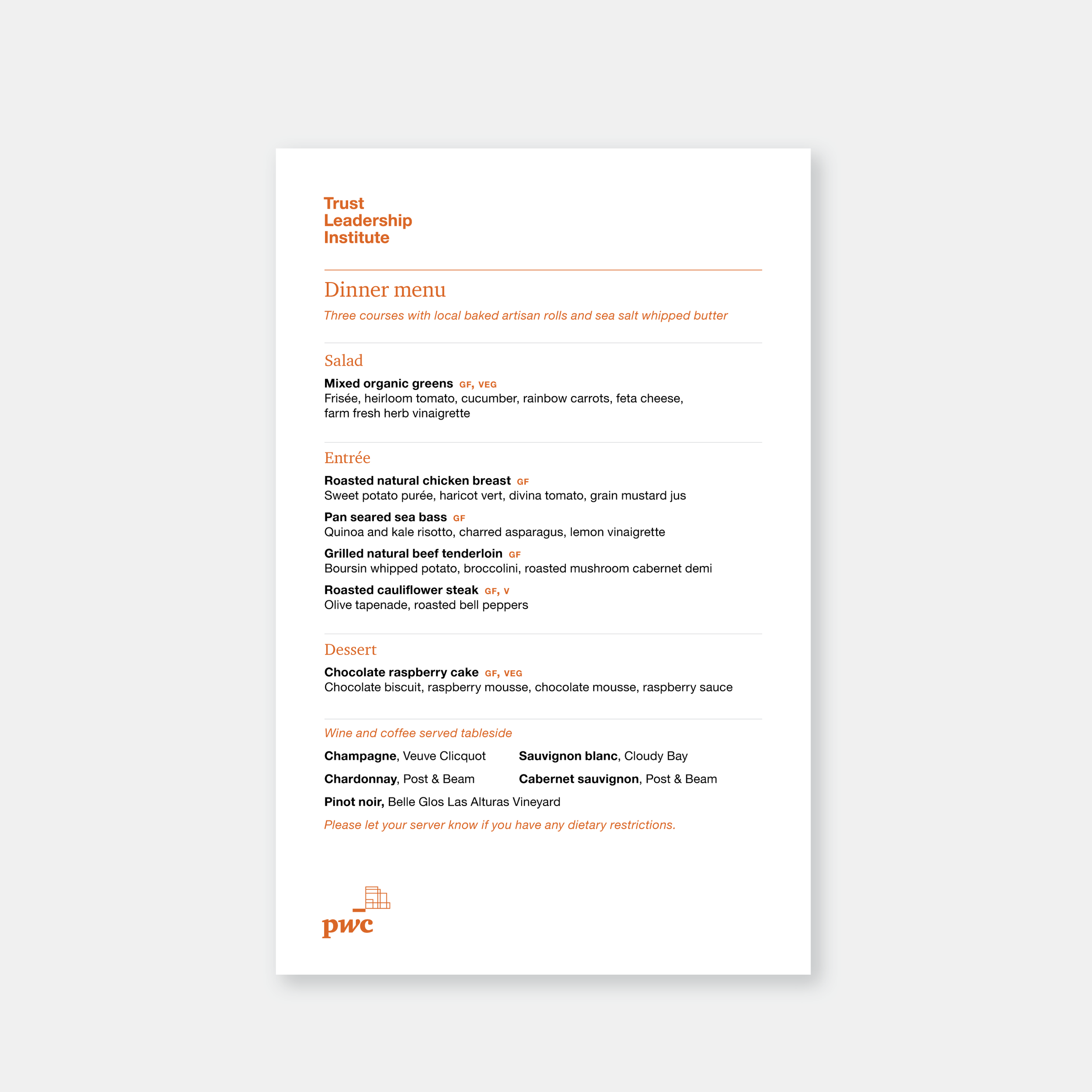
Menu card
-
![]()
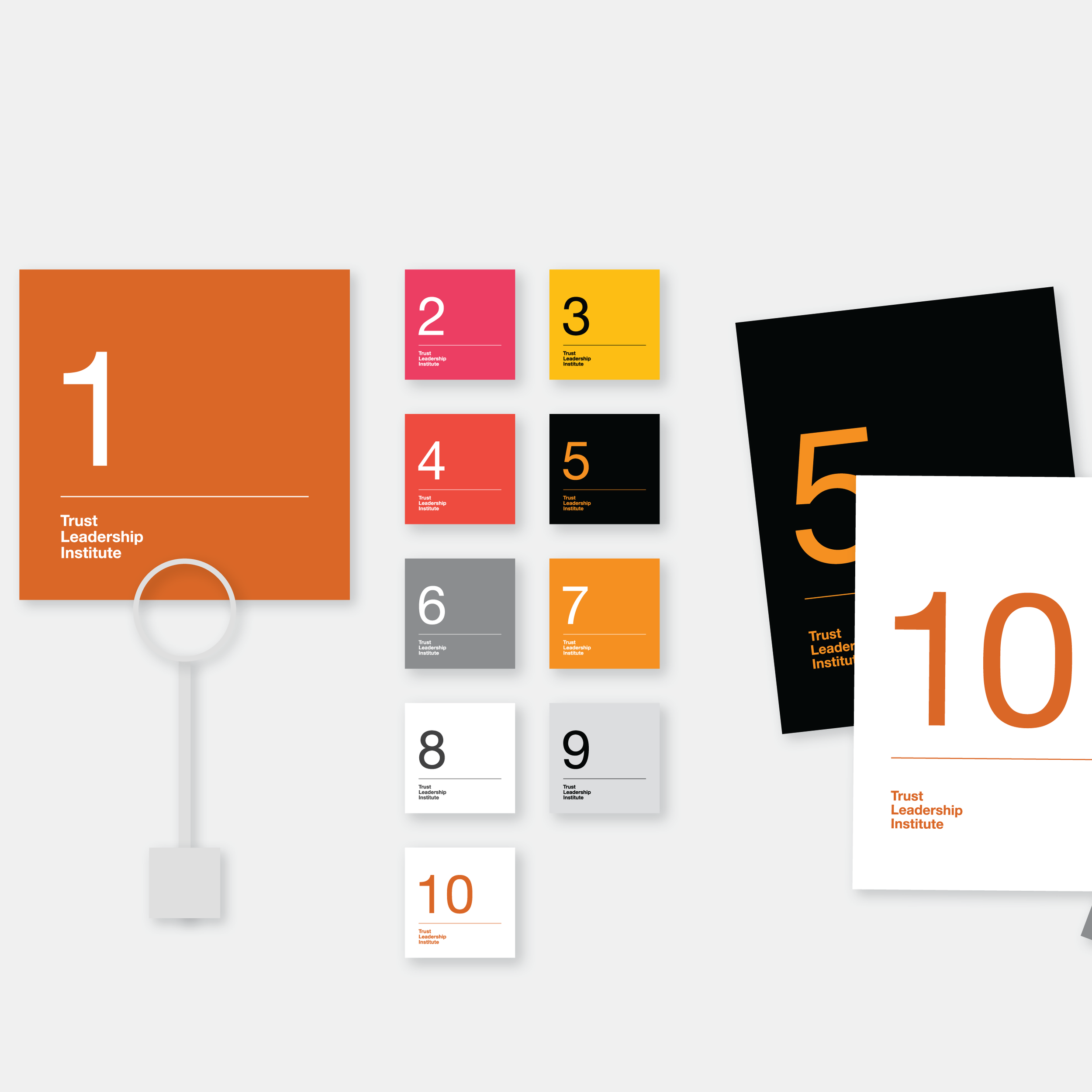
Table numbers
-
![]()
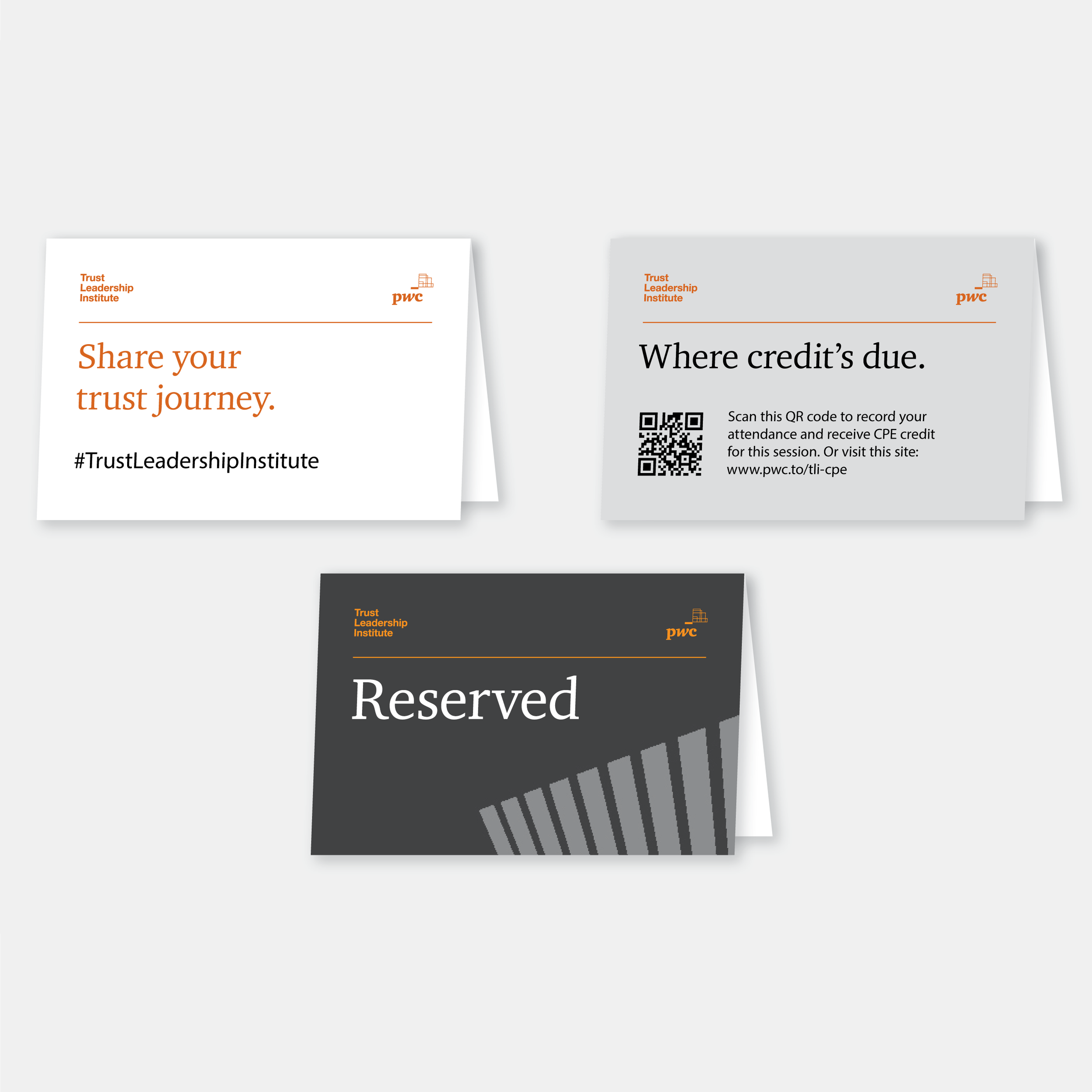
Table tents
-
![]()
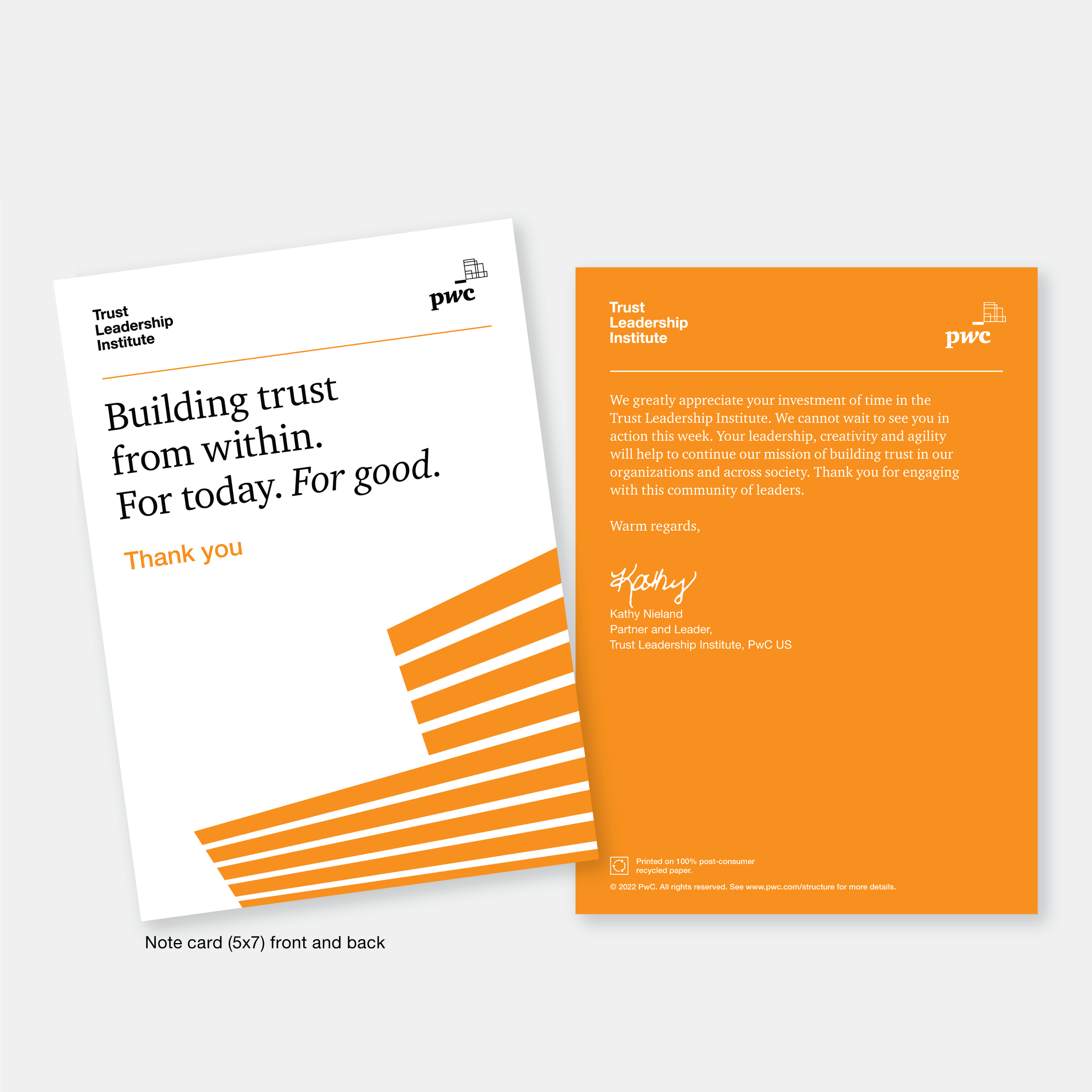
Thank You note